01
Learning objective
Enhance strategic thinking and decision-making skills through chess gameplay.
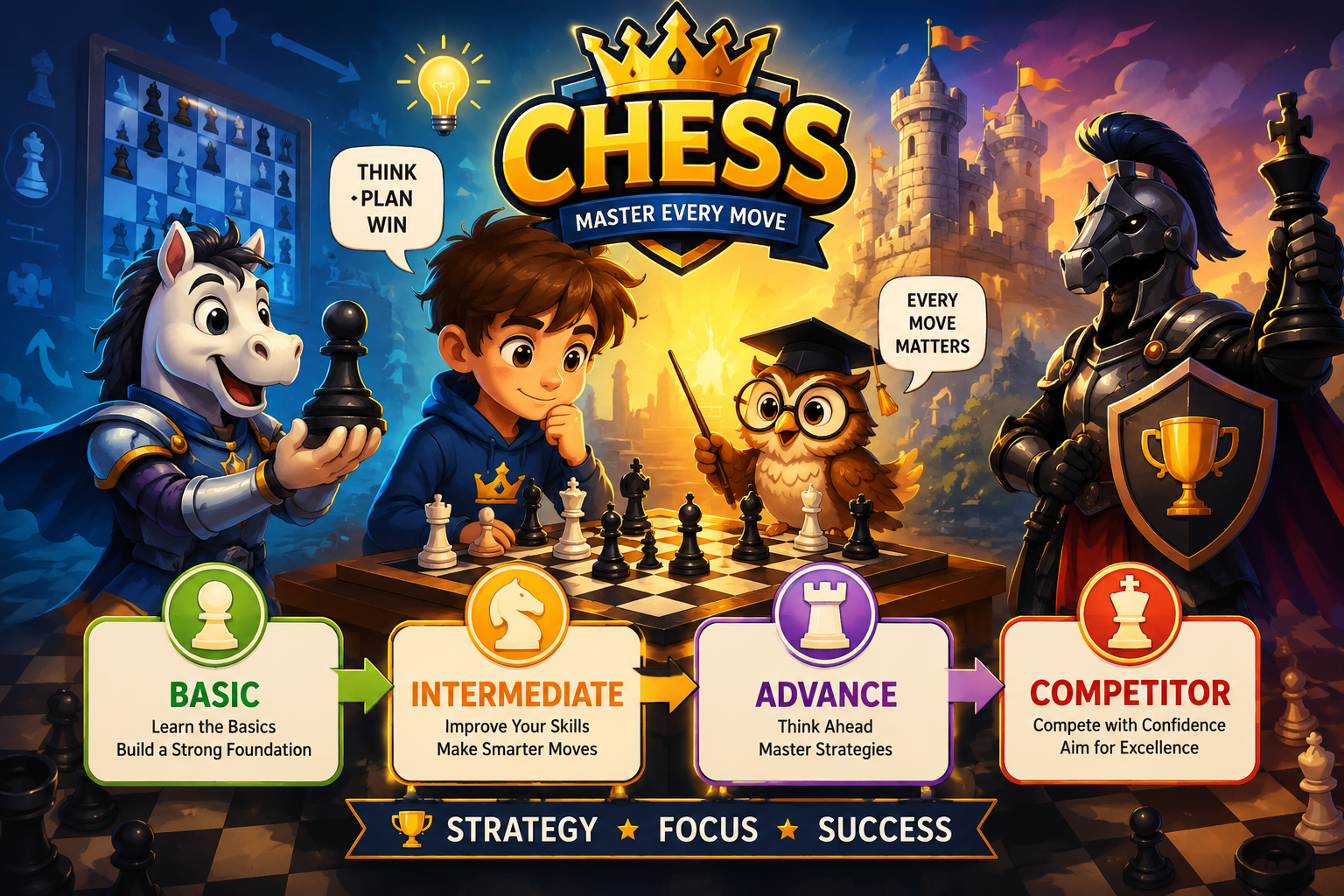
Intermediate chess — tactics, endgames, pawn structures, and game analysis for improving players.
Program snapshot
Key structure for Chess Intermediate — duration, rhythm and age fit at a glance.
3 months
Course duration
2
Weekly classes
24
Total sessions
60 minutes
Session length
5 years and above
Age group
What your child will build through Chess Intermediate — clear, mentor-led outcomes across the cognitive skills program.
Enhance strategic thinking and decision-making skills through chess gameplay.
Develop advanced tactical skills focusing on various chess concepts and positions.
Foster analytical skills through post-game analysis and review.
Promote holistic development including patience, focus, and perseverance.
The mentor-led methods that make Chess Intermediate engaging — hands-on, progressive and designed to spark confidence in every session.
Interactive gameplay sessions to reinforce learning.
Use of tactical puzzles and real-game scenarios to apply concepts.
Post-game analysis to encourage reflection and learning from mistakes.
Collaborative learning through group discussions and peer feedback.
Chess Intermediate builds the whole learner — not just technique, but the motor, cognitive and emotional skills that last beyond the classroom.
Problem-solving, critical thinking, and strategic planning.
Communication and teamwork during group activities.
Managing wins and losses, resilience, and sportsmanship.
A clear class-by-class path through Chess Intermediate — what happens in each phase, from the first session to the final review.
Gameplay practice and double attacks.
King-pawn endgames and discovered attacks.
Importance of castling and post-game analysis.
Introduction to pin, skewer, and piece activation.
Checkmate patterns using minor pieces and deflection tactics.
Identifying weaknesses — weak squares, pieces, and kings.
Doubled, isolated, and backward pawns.
Passed pawns and focused practice on weaknesses.
Rook and bishop endgames, including Lucena and Philidor positions.
Knight endgames and introduction to chess openings (1 e4/d4).
Endgame practice and naming openings; focus on decoy tactics.
Final evaluation, review of interference and overloading tactics, and course recap.
How mentor progress is tracked throughout Chess Intermediate — supportive check-ins and clear milestones, not high-pressure tests.
Post-game analysis evaluations to measure understanding.
Final evaluation comprising a practical test and theory review.
What learners take away from Chess Intermediate — skills, confidence and habits that continue well after the final class.
Enhanced ability to analyze and review games for continuous improvement.
Greater understanding of chess openings and their strategic implications.
Increased confidence in gameplay and participation in tournaments or casual play.
Book a free demo with a KidsChaupal mentor and get a personalised learning plan for your child.