01
Learning objective
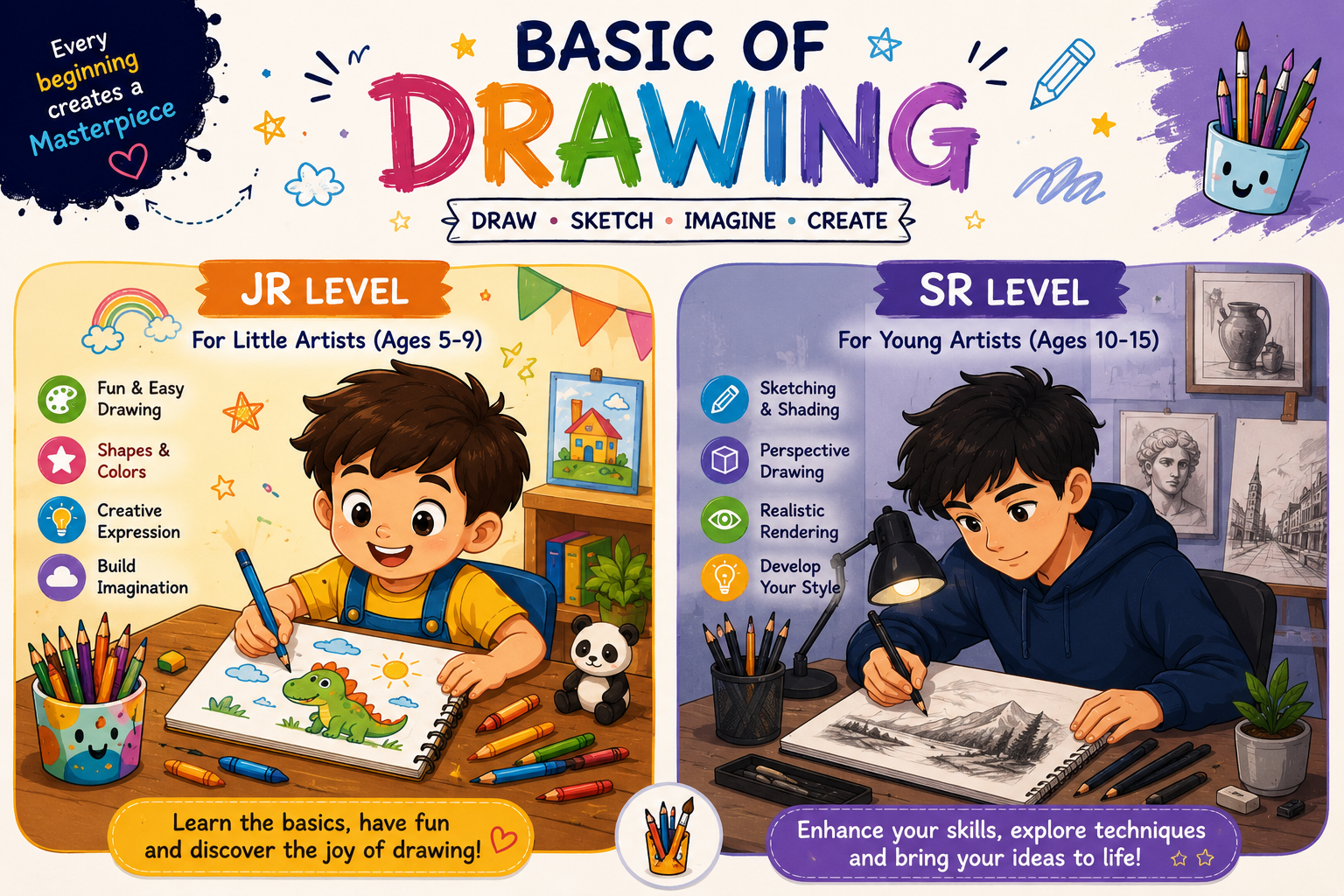
Develop basic drawing skills in young children.
Foundational drawing for young artists — shapes, colors, storytelling, and creative confidence through guided art projects.
Program snapshot
Key structure for Basics of Drawing Junior — duration, rhythm and age fit at a glance.
3 months
Course duration
2
Weekly classes
24
Total sessions
60 minutes
Session length
5–8 years
Age group
What your child will build through Basics of Drawing Junior — clear, mentor-led outcomes across the fine arts program.
Develop basic drawing skills in young children.
Improve hand-eye coordination.
Teach recognition and drawing of shapes, colors, and simple objects.
Foster creativity through storytelling and imaginative drawing.
The mentor-led methods that make Basics of Drawing Junior engaging — hands-on, progressive and designed to spark confidence in every session.
Step-by-Step Instructions: Break down complex drawings into simple lines and shapes to make it easy for children to follow.
Use of Tools: Introduction to drawing tools (pencils, crayons, erasers, etc.) to ensure children are comfortable using them.
Feedback and Encouragement: Positive reinforcement to boost confidence and creativity.
Basics of Drawing Junior builds the whole learner — not just technique, but the motor, cognitive and emotional skills that last beyond the classroom.
Refine fine motor skills through regular practice of drawing basic shapes, lines, and figures.
Enhance understanding of composition, proportions, and colors.
Encourage storytelling through art, helping children articulate their thoughts visually.
Regular feedback and fun projects help children take pride in their creations.
A clear class-by-class path through Basics of Drawing Junior — what happens in each phase, from the first session to the final review.
Basic lines and shapes, fruits, flowers, and introduction to color blending.
Create simple objects like a house, trees, fruit baskets, and flower pots.
Coloring landscapes, animals, jungle scenes, and shading techniques.
Introduction to still life, underwater animals, and pond scenes.
Human figures (boy, man, girl, woman) and a fun birthday party scene.
Imagination-based free drawing sessions, culminating in a final project.
How mentor progress is tracked throughout Basics of Drawing Junior — supportive check-ins and clear milestones, not high-pressure tests.
Creative Projects: Mid-course and final projects to evaluate understanding of landscapes, storytelling, and imaginative drawing.
Participation and Improvement: Ongoing evaluation based on class engagement and skill development.
What learners take away from Basics of Drawing Junior — skills, confidence and habits that continue well after the final class.
Color Understanding: Recognize and apply basic color blending and shading techniques.
Creative Confidence: Confidently express themselves through imaginative and structured drawings.
Hand-eye Coordination: Improved fine motor skills and precision in drawing.
Book a free demo with a KidsChaupal mentor and get a personalised learning plan for your child.