01
Learning objective
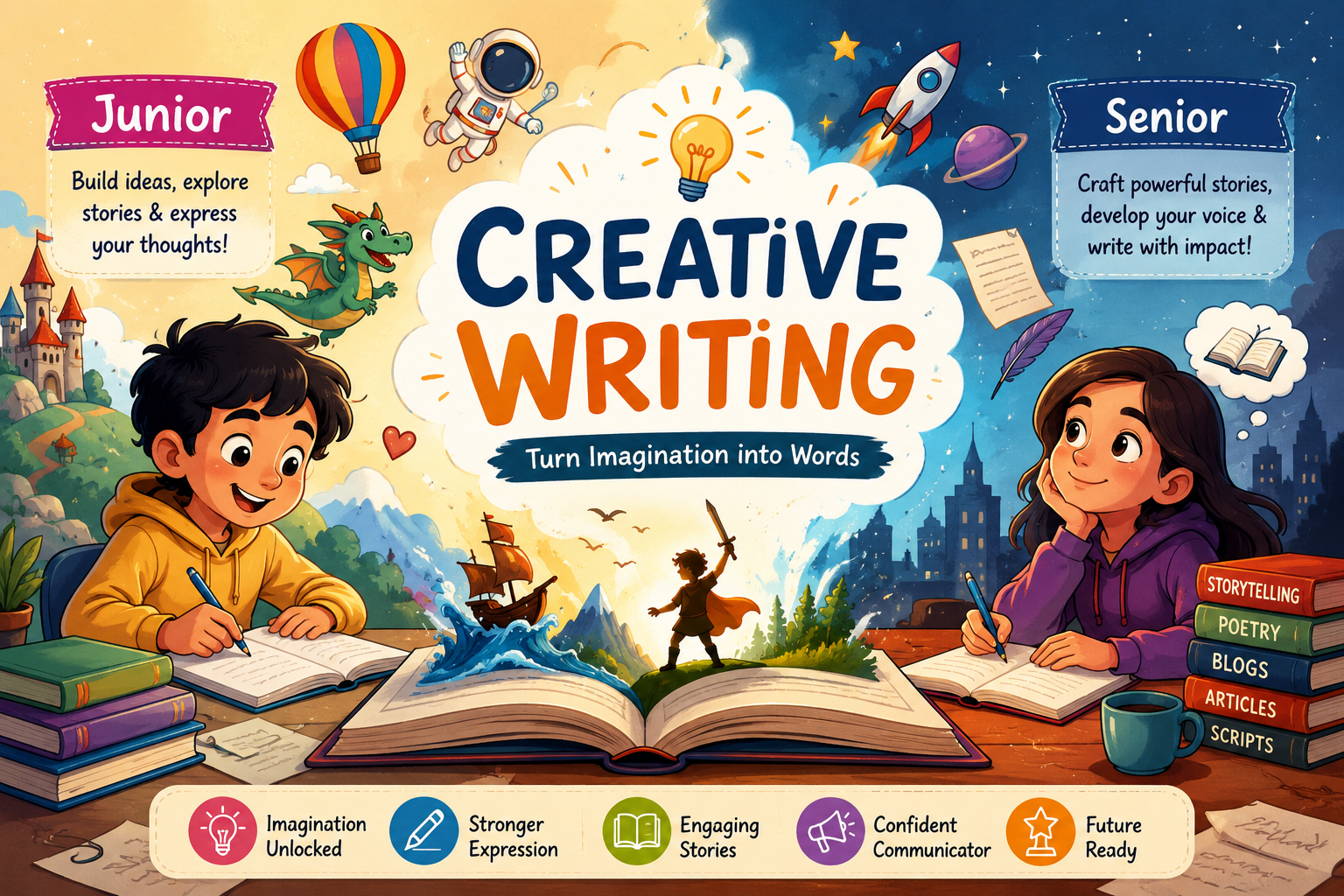
Foster creativity and imagination through writing exercises.
Imaginative writing journey — storytelling, character creation, genres, and portfolio development.
Program snapshot
Key structure for Creative Writing — duration, rhythm and age fit at a glance.
3 months
Course duration
3
Weekly classes
36
Total sessions
60 minutes
Session length
7–12 years
Age group
What your child will build through Creative Writing — clear, mentor-led outcomes across the language program.
Foster creativity and imagination through writing exercises.
Develop storytelling, character creation, and world-building skills.
Enhance students' ability to write in different genres and formats, including poetry and visual media.
Build collaboration, editing, and self-expression capabilities.
The mentor-led methods that make Creative Writing engaging — hands-on, progressive and designed to spark confidence in every session.
Hands-on Activities: Writing prompts, drawing, storyboards, and world maps.
Collaborative Projects: Develop team skills and creative exchange.
Peer-Review and Self-Editing: Exercises to build critical thinking.
Creative Writing builds the whole learner — not just technique, but the motor, cognitive and emotional skills that last beyond the classroom.
Enhances imagination, problem-solving, and critical thinking.
Expands vocabulary, grammar, and composition.
Fosters collaboration, peer interaction, and constructive feedback.
Encourages self-expression, empathy, and reflection.
A clear class-by-class path through Creative Writing — what happens in each phase, from the first session to the final review.
Imagination and creative expression.
Character development.
World-building.
Plot structure and conflict resolution.
Poetry writing.
Fantasy and mystery genres.
Comics and scripts.
Collaboration and peer editing.
Editing and receiving feedback.
Creating writing portfolios and exploring publishing options.
Writing challenges.
Final showcase of creative work.
How mentor progress is tracked throughout Creative Writing — supportive check-ins and clear milestones, not high-pressure tests.
Weekly Assignments: Story sketches, character profiles, plot diagrams, poetry, and genre writing.
Mid-Course Evaluations: Peer and self-assessments on writing progress.
Final Showcase: Public presentation of portfolios and selected works.
What learners take away from Creative Writing — skills, confidence and habits that continue well after the final class.
Increased confidence in editing, revising, and presenting original work.
Knowledge of publishing options and compilation of a writing portfolio.
Ability to write across different genres and formats with clarity and creativity.
Book a free demo with a KidsChaupal mentor and get a personalised learning plan for your child.