01
Learning objective
Understand key points of standard spoken and written German on familiar topics like work, school, leisure, etc.
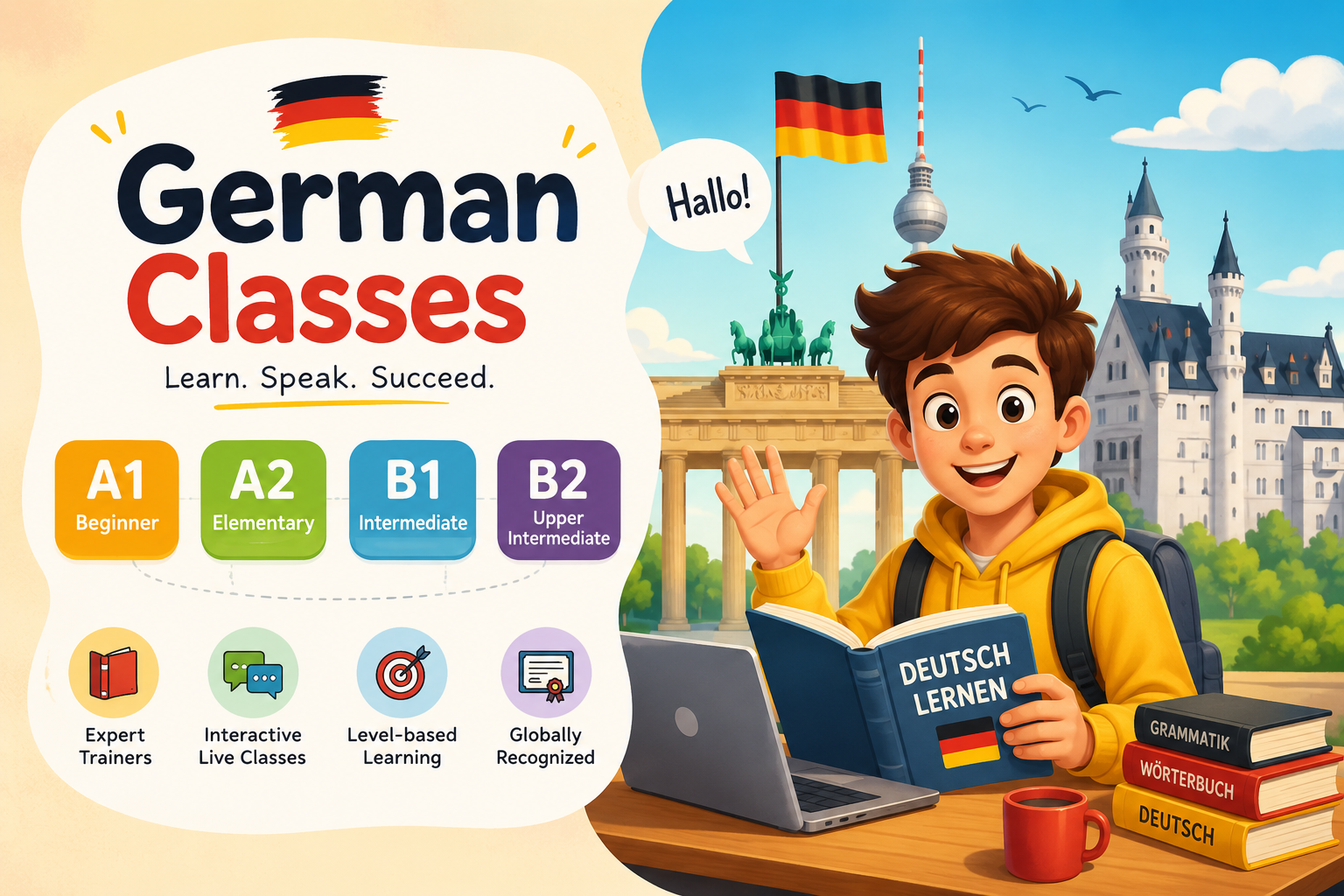
Intermediate German at CEFR B1 — connected conversation, advanced grammar, and confident expression on familiar topics.
Program snapshot
Key structure for German Level B1 — duration, rhythm and age fit at a glance.
4 months
Course duration
2
Weekly classes
32
Total sessions
60 minutes
Session length
7–18 years
Age group
What your child will build through German Level B1 — clear, mentor-led outcomes across the language program.
Understand key points of standard spoken and written German on familiar topics like work, school, leisure, etc.
Engage in simple, connected text about familiar subjects and share personal experiences, aspirations, and ideas.
Improve ability to handle more advanced conversations and express opinions with reasoning.
The mentor-led methods that make German Level B1 engaging — hands-on, progressive and designed to spark confidence in every session.
Interactive classes with role-playing, group discussions, and debates to foster active participation.
Worksheets and homework assignments for reinforcing vocabulary, grammar, and practical language use.
Continuous assessments with feedback to track progress and address areas for improvement.
German Level B1 builds the whole learner — not just technique, but the motor, cognitive and emotional skills that last beyond the classroom.
Build confidence in everyday conversational German.
Reinforce understanding of various tenses, sentence structures, and complex language expressions.
Facilitate cultural understanding and discussions on real-world issues.
A clear class-by-class path through German Level B1 — what happens in each phase, from the first session to the final review.
Topics: Personal goals, past experiences, work-life balance, making appointments.
Activities: Group discussions, role-playing, and short writing assignments.
Topics: Travel, dining, hobbies, technology use, and writing formal/informal emails.
Activities: Planning trips, restaurant reviews, tech-related discussions.
Topics: Climate change, cultural traditions, world news, problem-solving in daily life.
Activities: Debates, discussions on environmental issues and cultural differences.
Topics: Complaint letters, job applications, and presentations on chosen topics.
Writing letters, reviewing tenses, mock oral exams, and final presentations.
How mentor progress is tracked throughout German Level B1 — supportive check-ins and clear milestones, not high-pressure tests.
Weekly homework assignments (paragraphs, letters, essays, and dialogues).
Mid-course reviews with feedback on writing and speaking skills.
Final written and oral exams in Week 16, covering all grammar, vocabulary, and conversational topics.
What learners take away from German Level B1 — skills, confidence and habits that continue well after the final class.
Understand key ideas in familiar texts and conversations.
Confidently express thoughts and opinions using advanced grammar.
Engage fluently in discussions about everyday situations and cultural differences.
Book a free demo with a KidsChaupal mentor and get a personalised learning plan for your child.