01
Learning objective
Introduce young children to the fundamentals of public speaking.
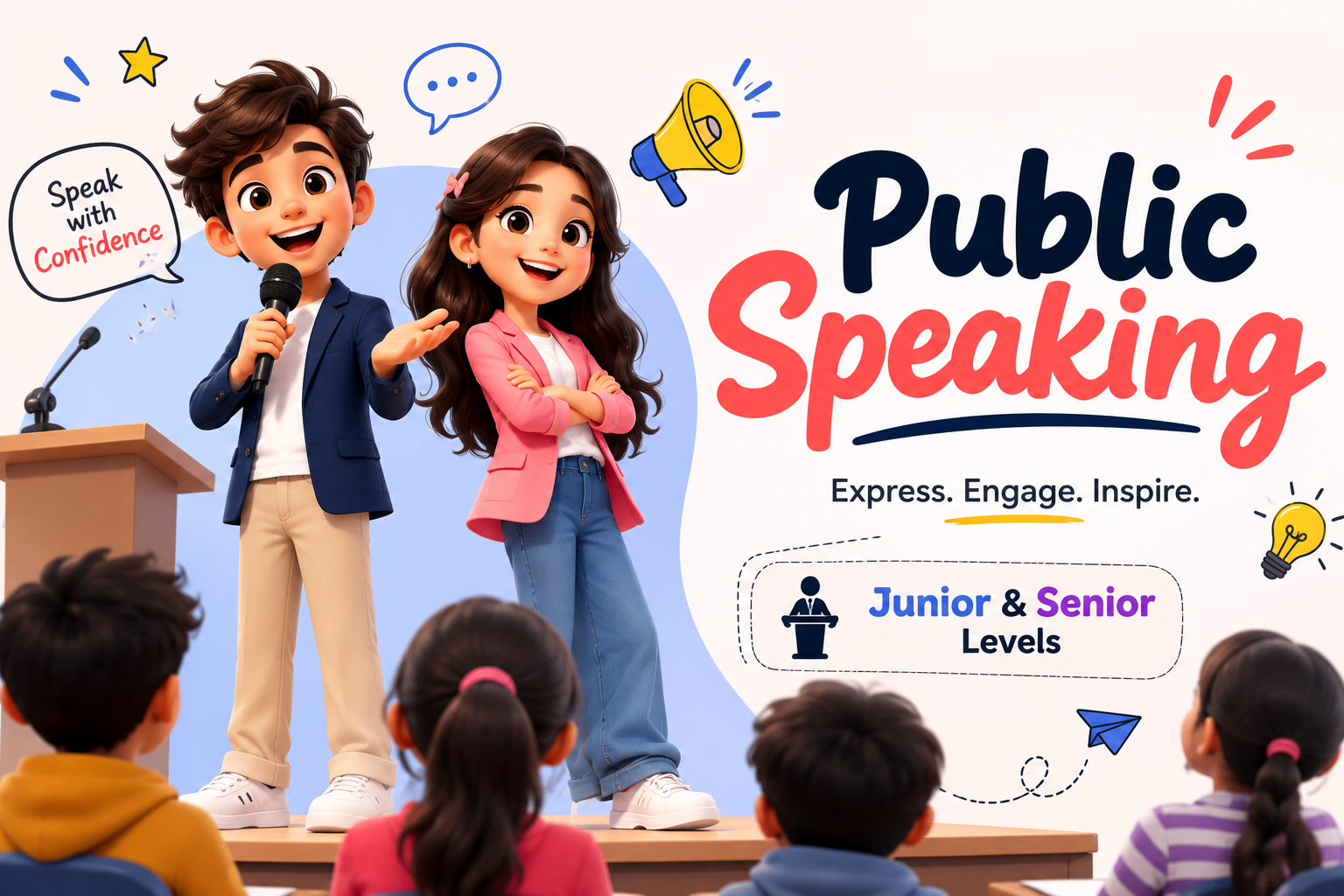
Foundational public speaking for young learners — confidence, storytelling, and expressive communication.
Program snapshot
Key structure for Public Speaking Junior — duration, rhythm and age fit at a glance.
3 months
Course duration
3
Weekly classes
36
Total sessions
60 minutes
Session length
6–9 years
Age group
What your child will build through Public Speaking Junior — clear, mentor-led outcomes across the language program.
Introduce young children to the fundamentals of public speaking.
Develop confidence, effective communication skills, and the ability to engage an audience.
Build structured and expressive speech through practice and positive reinforcement.
The mentor-led methods that make Public Speaking Junior engaging — hands-on, progressive and designed to spark confidence in every session.
Interactive Activities: Games, role-playing, and group discussions to make learning engaging.
Practical Exercises: Regular opportunities for students to practice speeches in a supportive environment.
Feedback Mechanism: Constructive peer and instructor feedback to foster improvement.
Use of Props and Visual Aids: Incorporating tools to make speeches more engaging and relatable.
Public Speaking Junior builds the whole learner — not just technique, but the motor, cognitive and emotional skills that last beyond the classroom.
Boosting self-esteem through regular practice and positive reinforcement.
Enhancing verbal and non-verbal communication through voice modulation, body language, and storytelling.
Encouraging originality and creativity in speech content and delivery.
A clear class-by-class path through Public Speaking Junior — what happens in each phase, from the first session to the final review.
Introduction to public speaking, basic speech structure, and storytelling — Show and Tell, Mirror Practice, Three-Part Stories, and Prop Storytelling.
Audience engagement, improvisation, and persuasive speaking — Audience Analysis, Improv Games, Persuasion Practice, and tech exploration for speech enhancement.
Conclusion crafting, thorough rehearsal, and final presentation — Conclusion Analysis, Final Speech Preparation, Event Setup, and Showcase.
How mentor progress is tracked throughout Public Speaking Junior — supportive check-ins and clear milestones, not high-pressure tests.
Weekly Practice Assignments: Short speeches and activities to reinforce learning.
Peer Feedback Sessions: Encouraging constructive criticism and self-reflection.
Final Showcase: A public speaking event where students present their final speeches to an audience.
What learners take away from Public Speaking Junior — skills, confidence and habits that continue well after the final class.
Confidently deliver well-structured speeches using voice modulation, body language, and visual aids.
Engage audiences, respond to questions, and handle impromptu speaking with ease.
Book a free demo with a KidsChaupal mentor and get a personalised learning plan for your child.